Meet the Founders


Dr. John Bosetti MD
Founder
Dr. Nancy Jameson MD
Founder
John B. Bosetti, M.D., co-founded the Eye Surgeons International Foundation in 2023 to improve access to eye care for underserved communities. John graduated with Highest Honors from the University of California, Davis, with a degree in Physiology. He was awarded the College Medal at UC Davis, given to the most outstanding graduate in the college. He earned his medical degree from the University of California, San Francisco (UCSF) in 1987 and was named a Regents Scholar at both UC Davis and UCSF. He completed his ophthalmology training at UCSF in 1991 and is a member of the Alpha Omega Alpha medical honor society.
John is a two-time recipient of the Hogan Award for laboratory research in ophthalmology at UCSF. He is certified by the American Board of Ophthalmologists and is a member of the American Academy of Ophthalmology. John has taught cataract surgery to UCSF residents for many years and is now focused on teaching doctors in underserved areas worldwide.
In 1991, John and Nancy Jameson founded the Eye Specialists of the Napa Valley.
Nancy A. Jameson, M.D., co-founded the Eye Surgeons International Foundation. Nancy graduated from Stanford University with a degree in Chemistry and was awarded departmental honors. She earned her medical degree from the University of California, San Francisco (UCSF) Medical School in 1987. She completed her ophthalmology training at UCSF in 1991 and is a member of Phi Beta Kappa and the Alpha Omega Alpha medical honor society.
Nancy is a two-time recipient of the Asbury Award for clinical research in ophthalmology at UCSF. She is certified by the American Board of Ophthalmologists and is a member of the American Academy of Ophthalmology.
Our Origins

WE CAN HELP
The founders, ophthalmologists Dr. John Bosetti and Dr. Nancy Jameson felt fortunate to have received excellent training, and to have worked in state of the art facilities with advanced equipment to maintain and improve the vision of their patients. Understanding the huge number of people with untreated, but curable blindness in poor countries, they wanted to personally help these patients and their doctors.
WHERE HELP IS NEEDED MOST
They knew they could help by doing surgery, treating eye diseases and bringing modern equipment to local doctors. They investigated the locations with the greatest need for their help. The were invited to work and teach at the Zimba Eye Hospital and clinic in Zambia, Africa, and they decided to go.
.jpg)

SAVING SIGHT
They traveled to Africa, providing direct surgical and medical care to the underserved, and teaching local physicians, medical students, and staff. During their time there, they were able to help restore the vision of many people who had been blind, often for many years. The main operations they did were to cure cataracts, the main cause of blindness worldwide.
HELP FROM OUR FRIENDS
Supported by generous donations from their patients, many others in the local community, and partners in the ophthalmology industry, they also provided desperately needed supplies, equipment and instruments to improve the quality and safety of care.

TEACHING & LEARNING
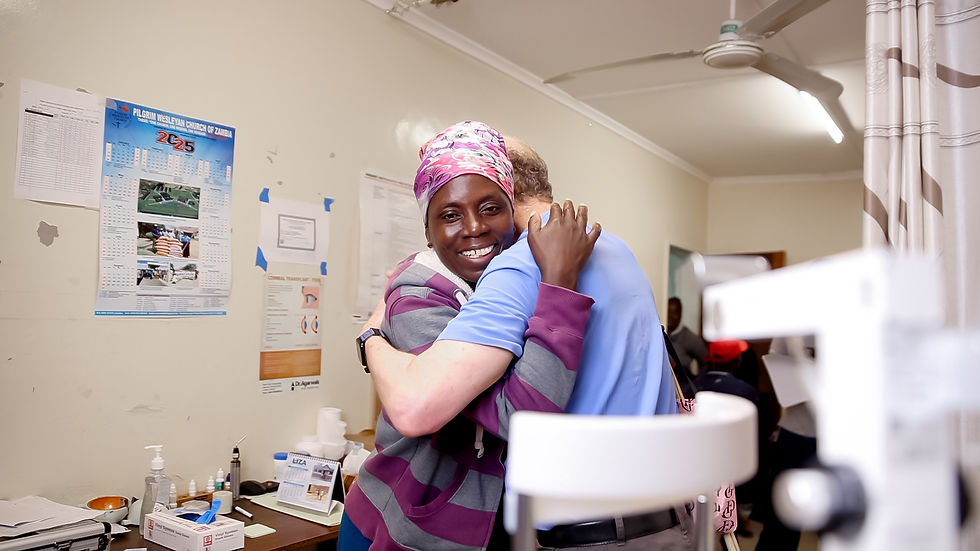
The days working in Africa were long and joyous. Seeing the smiles, and sometime tears of happiness, of those who could see the faces of their loved ones for the first time in many years is not something one forgets. Teaching a doctor to do a new operation to better help her fellow man is a step toward a better life for many.
WE NEED TO HELP MANY MORE PEOPLE
However, both doctors realized that the number of people they could help was limited. Teaching others was more effective, but the number of people they could personally teach was also limited. They also realized that the facilities they saw were quite old, small and crowded, often with poorly functioning equipment. Most importantly there was no room or technology to allow for efficient teaching. These experiences and observations led them to an inescapable conclusion: to truly decrease the vast number of patients who have treatable blindness, they must do much more. But what?

.jpg)
THE ANSWER
The answer was obvious. To reduce or eliminate treatable blindness in poor countries, more eye operations and other treatments must be done, especially cataract surgery. Those operations and treatments must be done well, using safe, modern techniques and procedures. They must also be done by local ophthalmologists who will spend their entire careers treating local patients. Many very common blinding eye diseases such as glaucoma and diabetic retinopathy require frequent in person examinations. This cannot be sustainably of effectively done by international doctor flying into the third world to work at temporary “camps.” The care must be done by local doctors, nurses and staff at local, modern facilities.
LOCAL STAFF
This local, long term care and large increase in the number of surgeries done will require many more local ophthalmologists/eye surgeons. More local ophthalmologists can only be created by establishing local training facilities and programs. The important staff including nurses and technicians can also be trained at these centers.


THE FUTURE
We are raising funds to establish a major teaching and clinical ophthalmic campus in Zimba, Zambia. Its centerpiece, the new Zimba Eye Hospital and Clinic, will include expanded clinical facilities, modern operating rooms, and inpatient wards.
A TEACHING CAMPUS
Construction began in early 2026 and the facility is expected to enter servic in approximately April 2027. Additional campus expansion, including educational and training facilities, is planned there

Defining the Future of Eye Care
Our strategy is simple but profound: to eliminate avoidable blindness through scalable outreach, cutting-edge technology, and the empowerment of local surgical leaders. By 2030, we aim to double our surgical footprint, ensuring that eye care is a right for every community we serve.
